
The Political Studies Association (PSA) Teaching & Learning Network (TLN) Annual Conference was held this September at the University of Glasgow. Over 50 colleagues from across the political studies community in the UK and beyond came together to explore the major challenges facing higher education today. Specifically, how do we continue to deliver excellent teaching amid growing uncertainty and change?
The conference theme, “Teaching amid Chaos”, spoke to the realities confronting universities across the sector. Participants reflected on the mental health challenges amongst students, financial pressures affecting higher education institutions, rapidly evolving student expectations, and the growing influence of artificial intelligence on teaching, learning, and assessment.
The keynote address was delivered by Dr Donna Smith of The Open University and Honorary Secretary of the PSA. Drawing on the Open University’s extensive experience of large-scale online education, Donna explored what resilient pedagogy looks like in periods of disruption. Her conclusions were that we need to work with students as partners around the issues that we face in the sector.
The conference ran a number of streams around alternative pedagogies and learning to do better. The first stream saw papers on the role of comedy in teaching, queer visibility, punk pedagogy and the politics of care. The second saw – for the first time – skills, feedback, employability and zombies in the same panel, before other panels explored how to teach conflict (and understand the sensitivities that come with that topic) and a special focus on teaching the future of the academy-support and training for GTAs.
Artificial intelligence featured prominently throughout the conference programme. From papers exploring how colleagues teach students about the ethical aspects of AI usage in the classroom, through a call for us to not be the AI police, an AI realist position emerged where colleagues appreciated that AI was with us and that as political scientists we are well positioned to critically engage with its use.
The conference also provided an opportunity to reflect on the wider state of the sector. Participants discussed issues including staff wellbeing, the sustainability of current higher education models, and the importance of maintaining inclusive learning environments during periods of significant institutional change.
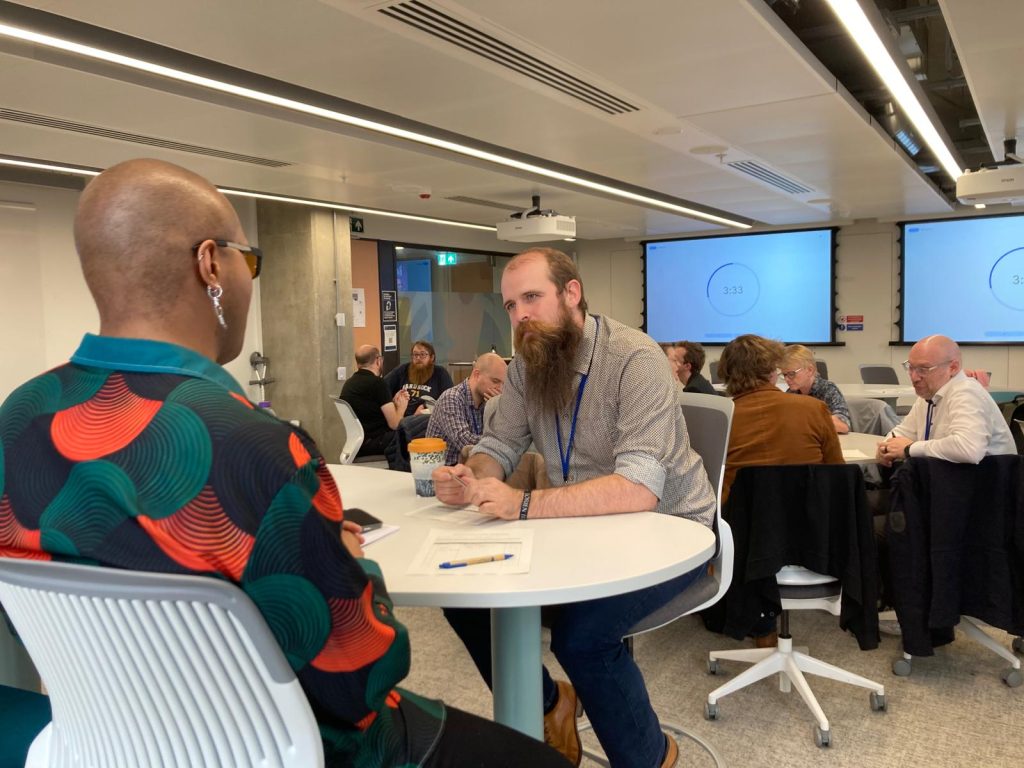
Apart from conversations over the excellent dinner (kindly subsidised by the University of Glasgow’s Innovative Pedagogy Hub), both days ended with the opportunity for networking and developing SoTL practice. On Thursday the award-winning Innovative Pedagogy Hub ran a SoTL Speed-Dating session which allowed delegates to explore common areas of interest with each other, whilst on Friday the ASPIRE Network facilitated a workshop that provided practical how-to advice for Teaching & Scholarship colleagues about creating a personal “pitch” and crafting their career narrative.
The success of the TLN annual conference this year shows the health of pedagogic research amongst the political studies community in the UK. The conference is establishing itself as the premier destination for the presentation of cutting-edge pedagogic research. Most importantly it continues to provide an inclusive and supportive environment for colleagues to do that.
Our thanks to the University of Glasgow, Politics journal and the PSA team for their work in organising the conference.
The annual TLN Conference is off to York in 2027 – we hope to see you there!


